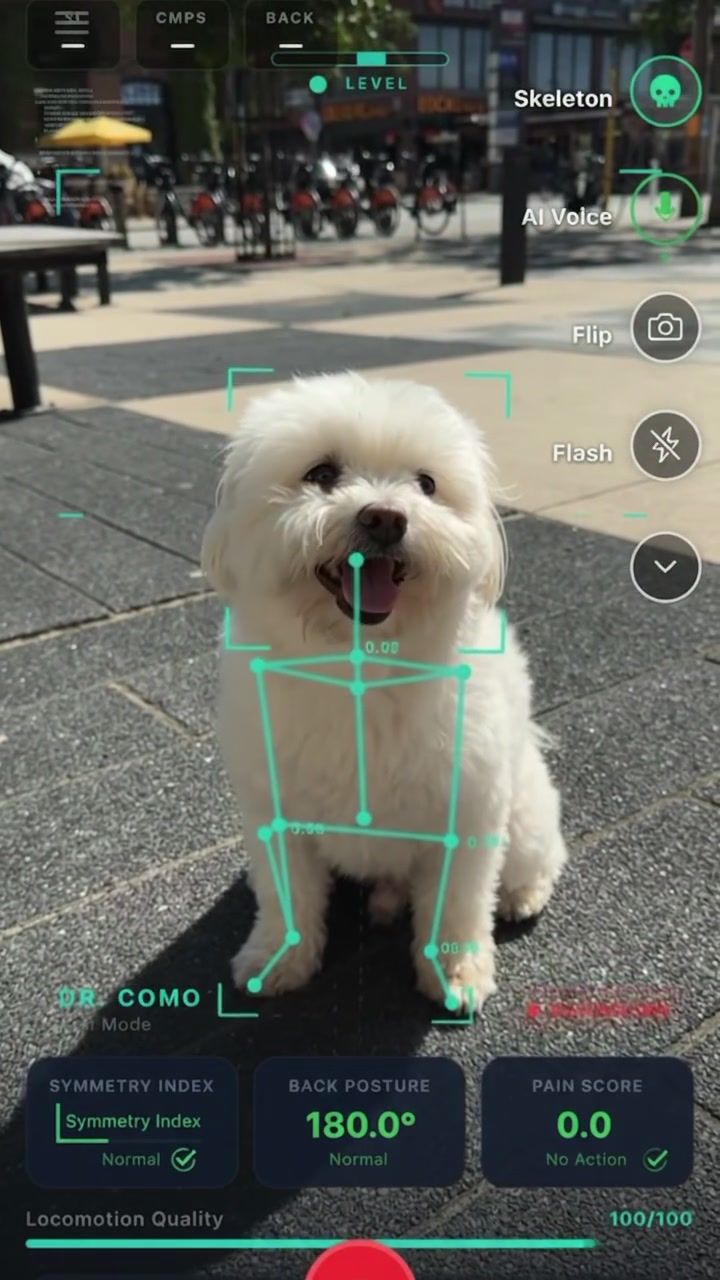
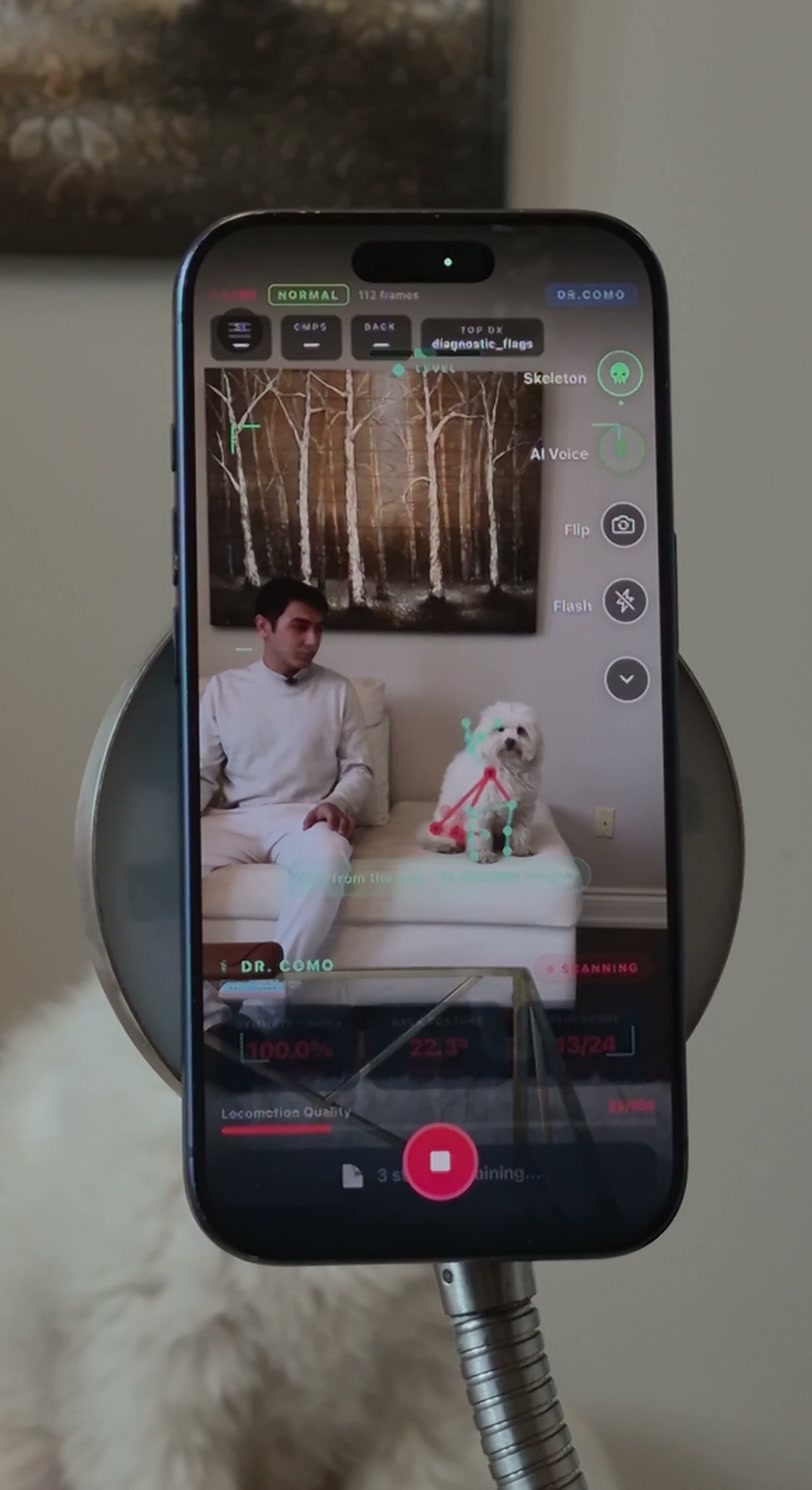
Como is a screening and monitoring tool for dogs and cats. Between visits, your clients run a short, guided exam at home with a phone. Como measures what the camera can support and returns a structured clinical report to your practice — ready for your workup, before the client walks in.
It does not diagnose. Every report routes the case back to the practice for hands-on assessment.
The guided home exam
The client is walked through three captures, with on-screen positioning guidance:
- Posture — the animal standing naturally, from the side and front
- Gait — walking toward, away, and across the camera
- Facial close-up — a short, calm close-up for grimace assessment
What the report contains
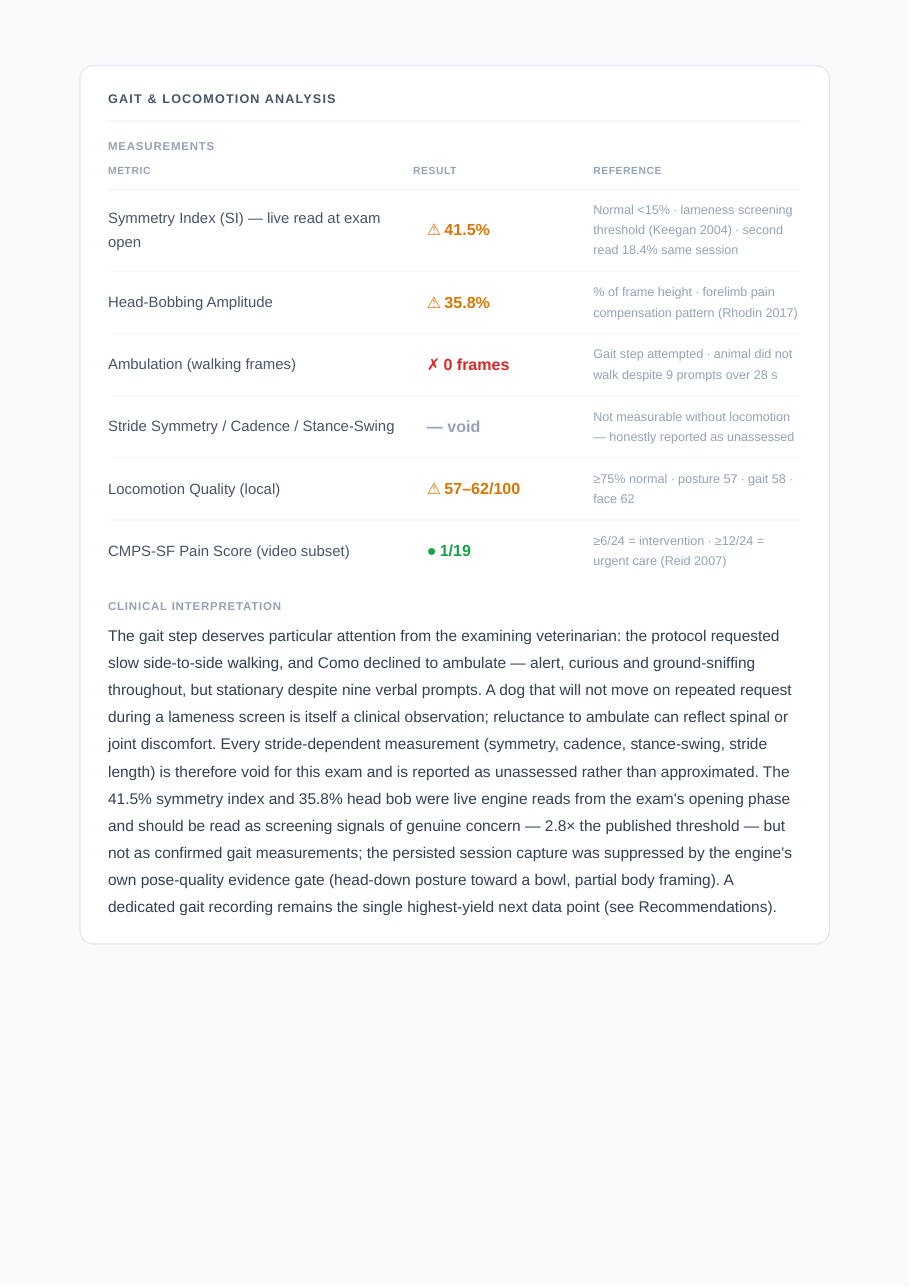
- Symmetry index, read against the published screening threshold (Keegan 2004; flag at ≥15%)
- Pain score on the CMPS-SF scale (Reid 2007), and a grimace score
- Joint-alert mapping — which joints the movement data flags, and how strongly
- Differentials ranked against SNOMED-CT, in order, with the measurements behind each ranking
- A recommended workup in every report — palpation, range of motion, imaging where indicated
How we handle measurements we can’t support
If the footage cannot support a measurement, that measurement is voided — never estimated, never interpolated. The report shows what was measured, what was flagged, and what was voided and why. A screening tool that invents numbers is worse than one that admits a gap.
Example case
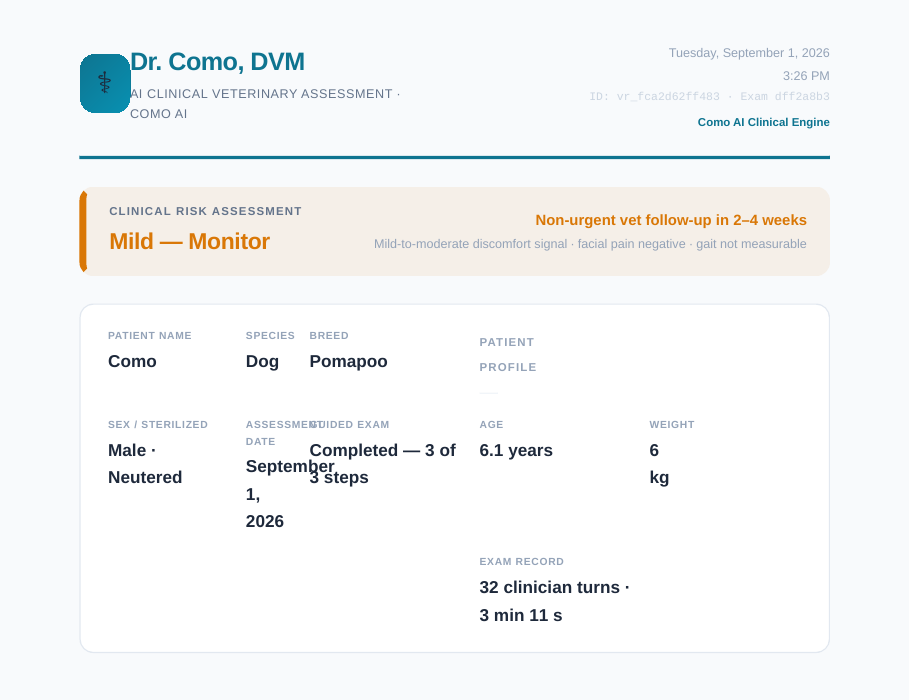
Patient: Como, 6.1-year-old Pomapoo. No visible lameness reported by the owner. Symmetry index: 41.5% — nearly three times the 15% screening threshold. Overall reading: “Mild — Monitor” — CMPS-SF pain score 1/19, grimace 1.19/8. Early-stage osteoarthritis ranked first among the differentials. Confirmed on examination at the practice.
The point of the case: the dog looked sound. The measurement is what surfaced the case.
Questions?
Questions, or a case you’d like us to look at: admin@comoai.app